

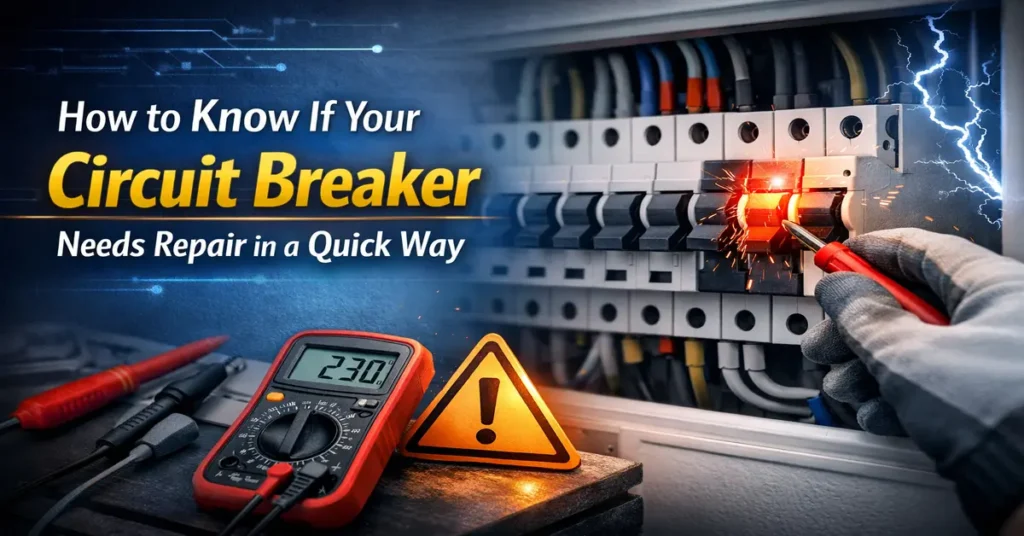
Have you ever flipped a switch and nothing happened? The lights are off, and devices feel dead. Stress is natural here. If you ever felt this, you know the fear of a tripped breaker. But don’t worry. We have tried to cover each point below. Don’t scroll anywhere, stick to this read, and understand why your circuit can trip. Also, how would you repair? Surely, you’ll be able to save your home, gadgets, and even peace of mind.
Circuit breakers won’t let you know before breaking down. They will just trip during the AM and PM. Some homeowners—what do they do? They leave the issue, thinking it will be solved by itself later. But remember, ignoring small signs is like leaving a leaking faucet. Ultimately, small issues grow into a major disaster. Never left these signs unnoticed:
Just imagine it’s midnight and your living room starts flickering. No, it’s not a ghost moment. The room isn’t just flickering, but also a smoke smell can be felt. This might be a sign of a serious electrical problem. Act immediately and contact a professional service to prevent a fire. Hence early detection matters.
Not all breaker issues require a professional. Some are safe for homeowners to troubleshoot.
Flip the breaker switch OFF completely and then back ON. Be careful here, because a half-flipped switch will not do the work.
More often, circuit breakers trip due to an overloaded circuit. Remove all plugs from the circuit quickly. Reset the breaker.
Check the circuit breaker switch and wires. Look carefully for any signs of dust buildup, loose wires, and scorch marks. However, do not touch wires, especially if they are active.
Note: These steps are helpful in minor issues. If you notice burning smells, heat, or visible damage, it’s time to call an electrician or circuit breaker repair service in Denver.
Your breaker works as a traffic cop for electricity. From flowing electricity to preventing overloads, it does wonders. Also, protect your appliances quietly.
Choose a breaker according to your safety needs. Never pick the wrong broker; it will be like putting diesel in a gasoline engine. It won’t work and could also be hazardous.
I know it’s frustrating while dealing with a faulty unit. But before picking up your phone and calling an expert technician, look carefully at how you can detect the problem easily by yourself.
Detecting issues by following the above step will allow you to take safety measures and minimize the problem before the technician arrives.
Some fixes are safe, others aren’t.
Now you have a whole point: in which situation is the best option, a DIY trick or an electrician? Additionally, always hire an expert electrician. He ensured a safe circuit breaker repair.
Sometimes, repair is like throwing money away for no purpose. Replacement becomes an essential choice when no repair trick works. How you can do it all alone:
Tools You Need: Voltage tester, insulated screwdriver, wire strippers, replacement breaker.
Steps:
Things to remember: Any time you feel unsure about any step of the above, leave everything and call a professional circuit breaker repair service. Don’t make it risky to deal.
Electricity is unforgiving. Always:
Safety is non-negotiable. Never compromise on it. A little carelessness could be the reason of biggest regret.
Think of Preventive maintenance as a routine check-up to stay tip-top. Regular maintenance keeps your home safe and a comfortable place to live.
It’s a kind of routine care for your home’s heart.
Recurring trips, old panels, or multiple issues? Schedule a professional inspection.
Wiring integrity check
Breaker compatibility review
Compliance with current safety standards
Consider Smart Breakers
Modern breakers aren’t just protection. They’re tools to kick out daily hassles.
Although a little costlier, they are pretty good for convenience and safety.
Hiring a pro means you’re asking for quality. A reputable electrician solves the issue promptly, and the results stay for a long time. While choosing an electrician, look for these necessary points:
A skilled electrician would be beneficial for your budget. Ensuring your reliability.
Guidelines To Follow
Circuit breaker repair is more than flipping a switch. It’s protection, peace of mind, and home safety rolled into one.
Hiring a pro means you’re asking for quality. A reputable electrician solves the issue promptly, and the results stay for a long time. While choosing an electrician, look for these necessary points:
A skilled electrician would be beneficial for your budget. Ensuring your reliability.
Guidelines To Follow
Circuit breaker repair is more than flipping a switch. It’s protection, peace of mind, and home safety rolled into one.