
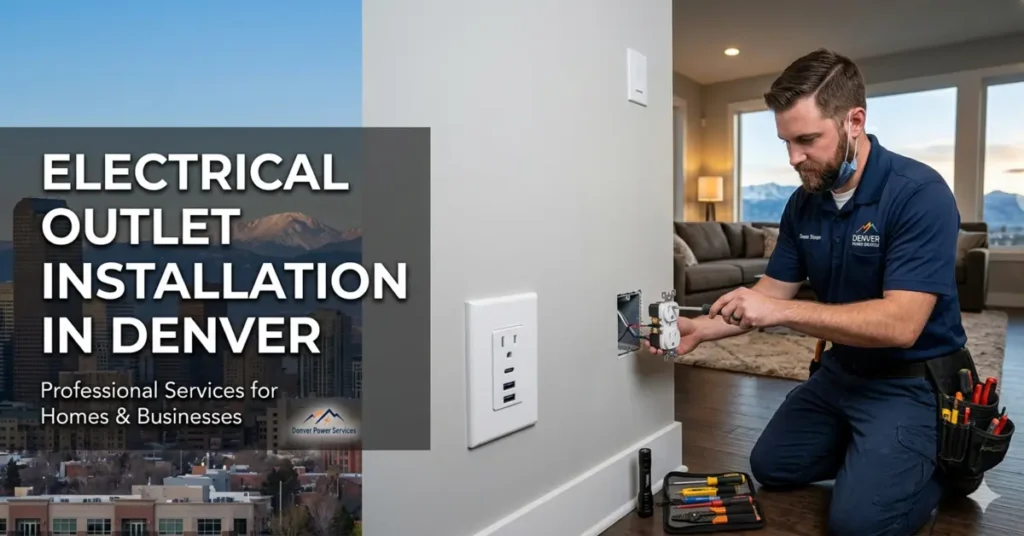
An outlet goes dead. Or there is simply no outlet where one is badly needed. First thought how hard can it be?
Harder than it looks. Every time.
Electrical work punishes guesswork in ways that other home repairs do not. A loose connection behind a wall plate does not just fail it creates heat. Heat builds. Nobody sees it. And what started as a dead outlet becomes something far more serious inside a wall where no one is looking.
Electrical outlet installation done right is a clean, straightforward job. Done wrong it creates problems that show up months later with no obvious cause and no easy fix.
People picture electrical outlet installation as pulling out the old one and snapping in a new one. Sometimes that is genuinely all it is. More often not even close.
Replacing an existing outlet: Out with the old, in with the new. Except an outlet that stopped working stopped for a reason. Burned wiring behind the wall. A connection that worked loose over years of use. Replacing the outlet without finding that reason means the new one fails too usually faster than the first one did.
Adding an outlet where none exists: Completely different job. A new outlet needs power getting to it. That means new wiring running from an existing circuit or a brand new circuit coming from the panel. Walls get opened. Wiring gets routed and secured. Every bit of it has to meet current Denver electrical code before the wall closes back up.
Upgrading an outdated outlet : Two-prong outlets in older Denver homes are not just inconvenient. In kitchens, bathrooms, garages, and outdoor locations current code requires GFCI protection. That upgrade is not optional. It is a code requirement with a real safety reason behind it.
How to install an electrical outlet the right way here is the full process from the moment work starts to the moment it finishes.
Power off confirmed, not assumed. Circuit identified at the panel. Breaker shut off. Voltage tester on the wires before anything gets touched. The switch being off is not enough. The breaker has to be off and verified.
Wiring behind the wall gets looked at first. Before the new outlet goes anywhere near the box everything behind that wall gets checked. Burn marks on wire insulation. Connections that have worked loose. Evidence of heat damage. Installing an electrical outlet on top of a wiring problem does not solve the problem. It buries it where nobody will find it until something goes wrong.
Box positioned and locked in place. Correct height. Secured to the wall framing. Sitting flush with the finished wall surface not behind it, not past it. A box that moves or sits wrong is a code violation before a single wire gets connected.
Every wire goes to the right place. Hot to brass. Neutral to silver. Ground to green. Each connection made tight. A connection that feels secure but is not fully tightened is one of the leading causes of outlet failure and electrical fires that start inside walls without warning.
Tested before the job closes. Breaker back on. Circuit tester checks wiring, grounding, and polarity. All three correct before anyone calls the job finished.
Installing an electrical outlet means more than picking something off the shelf. The location determines the type. Using the wrong one is a code violation and in some spots, a genuine hazard.
Install electrical outlet calls for Denver electricians and turn up surprises regularly. Here is what changes a simple job into something bigger.
Aluminum wiring. A lot of Denver homes have it. Aluminum and standard outlets are not a safe combination without connectors and outlet types rated specifically for aluminum wiring. This is not a minor detail it is a fire hazard when it gets ignored.
No ground wire. Older two-wire systems have no ground. Installing electrical outlet with a three-prong outlet on an ungrounded circuit requires one of three things running a new ground wire back to the panel, installing a GFCI outlet with the proper labeling, or running an entirely new circuit. None of those options is a quick swap.
Panel with no room left. A new circuit needs an open breaker slot. No open slots means the panel situation has to get resolved before anything new gets added. Cramming two circuits onto one breaker is not creative problem solving it is a hazard.
Wiring that does not meet current code. Old wiring that passed inspection under previous code does not automatically meet today’s requirements. Opening walls for an outlet installation sometimes uncovers wiring that needs to get brought up to current standards before anything new connects to it.
Electric outlets install an honest answer on whether a homeowner should tackle it.
Straight swap on a newer home with simple wiring and nothing unusual behind the wall some homeowners handle that without issues. The job is contained. The wiring is clear. The risk is manageable.
Everything else install an electrical outlet in a new location, upgrading from two-prong to three-prong, working anywhere near water, or adding a new circuit, is a job for a professional. Not because the instructions are too complicated. Because what is behind the wall is unknown until someone who knows what to look for actually looks at it.
Denver requires permits for most electrical work beyond basic replacements. No permit means no inspection. No inspection means problems at resale and potential gaps in homeowner’s insurance coverage when an electrical issue comes up. That is a risk with real consequences attached to it.
A professional pulls the permit, does the work correctly, and gets the inspection done. That piece of paper protects the homeowner long after the outlet is installed.
Electrical outlet installation service quality in Denver is not consistent across every contractor. Before hiring anyone ask these questions and listen carefully to the answers.
Someone who does this work regularly answers all four without hesitation. Pushback on the permit question or vague answers about what the inspection covers keep coming up.
Our electrical outlet installation Denver jobs come with considerations that do not apply everywhere else.
Older homes make up a large part of Denver’s housing stock. Knob and tube wiring, aluminum wiring, and ungrounded two-wire systems show up regularly in properties that have never had electrical updates. Each one changes what an outlet job involves before the first screw comes out of the wall plate.
Denver’s seasonal temperature swings add another layer. Hot summers, cold winters, and the expansion and contraction that comes with both put stress on electrical connections over time. An outlet that stops working in an older Denver home is frequently pointing at a wiring issue that goes beyond just the outlet. The outlet is the symptom. The wiring is the actual problem.
Electrical outlet installation is one of those jobs that looks completely manageable until the wall plate comes off and the real situation shows itself.
Right outlet and Right circuit. Correct connections. All of it together is what makes an outlet work safely for years without issues. Getting there means knowing what is behind the wall not just what is visible standing in the room.